How to Whiten Teeth Naturally: What Really Works
Natural ways to reduce surface stains, the limits of home remedies and when to see a dentist.
Editorially reviewed.

How to whiten teeth naturally? You can remove and prevent surface stains by brushing well, cutting back on coffee, tea, red wine and smoking, and having regular cleans. Changing the colour inside the tooth needs dentist-supervised whitening.
“Natural” whitening tips are everywhere online, from baking soda pastes to fruit scrubs. Some help a little with surface staining; others risk wearing enamel. This guide separates what the Australian Dental Association (ADA) and the Victorian Government’s Better Health Channel actually say from the hype.
Why do teeth lose their whiteness?
The ADA divides stains into two groups:
- Extrinsic (outside the tooth): pigments called chromogens from coffee, tea and red wine attach to enamel; tar and nicotine from smoking give a yellowish colour; and children who swim more than six hours a week are at higher risk of staining.
- Intrinsic (inside the tooth): certain medications taken while teeth were forming, such as tetracycline, trauma to a tooth, amalgam fillings and root canal treatment.
- Ageing: enamel thins over time, letting the darker dentine underneath show through.
Natural methods can only help with the first group. That is why a dental check is worth having first: the ADA says dental practitioners are best placed to diagnose the cause of discolouration and advise whether whitening will work.
What natural steps actually help?
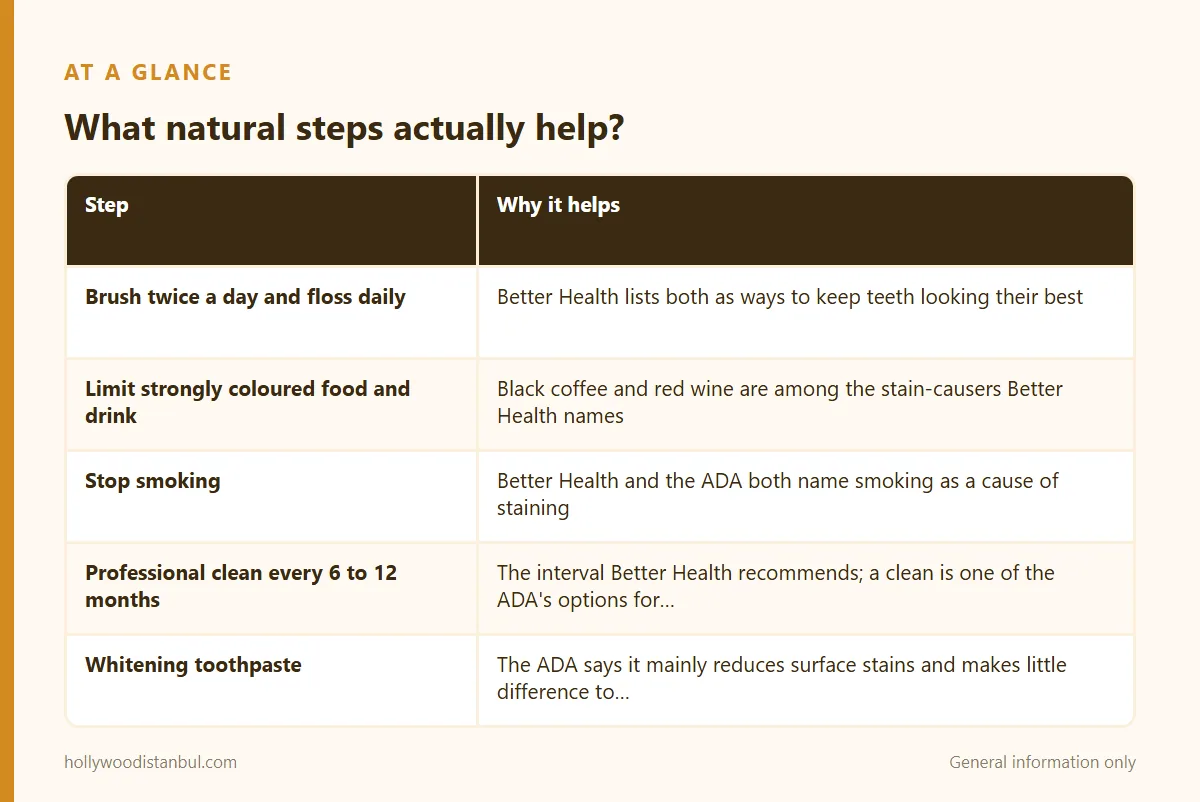
| Step | Why it helps |
|---|---|
| Brush twice a day and floss daily | Better Health lists both as ways to keep teeth looking their best |
| Limit strongly coloured food and drink | Black coffee and red wine are among the stain-causers Better Health names |
| Stop smoking | Better Health and the ADA both name smoking as a cause of staining |
| Professional clean every 6 to 12 months | The interval Better Health recommends; a clean is one of the ADA’s options for surface stains |
| Whitening toothpaste | The ADA says it mainly reduces surface stains and makes little difference to tooth colour |
Does baking soda whiten teeth?
Only at the surface. The ADA says baking soda is mildly abrasive and can help with light surface stains, but it will not change the colour inside the tooth, and it is not recommended for daily brushing. A fluoride toothpaste that already contains baking soda is a better choice than a homemade paste, because you still get fluoride protection.
What about charcoal, lemon or oil pulling?
The ADA’s whitening guidance does not recommend these, and they are not among the options it lists for stains. Anything gritty or acidic deserves caution: the ADA explains that when enamel thins, the darker dentine underneath shows through, which is the opposite of what you want. If you are tempted to try a trend, ask your dentist first.
When natural methods are not enough
If your teeth are naturally darker, discoloured from the inside, or still dull after a clean, natural methods will not change much. The ADA describes two dentist-supervised options: in-chair whitening with a strong hydrogen peroxide gel, and take-home whitening using custom trays, which takes longer but is not necessarily better or worse in the end. Better Health notes supermarket and chemist products use a similar ingredient in smaller amounts and are less effective.
Whitening has limits and side effects. The ADA warns of sensitivity to cold and chemical burns if gel touches the gums, and both sources point out that crowns, veneers and white fillings will not change colour. Whitening is not recommended during pregnancy or breastfeeding. Read more in how teeth whitening works in Australia.
A simple natural whitening routine
- Book a check-up and professional clean to reset the baseline.
- Brush twice daily with fluoride toothpaste and floss once a day.
- Drink coffee, tea and red wine less often.
- Quit smoking.
- Keep a professional clean every 6 to 12 months.
If you are weighing up costs for professional whitening, see our teeth whitening cost guide for Australia.
Sources
- Australian Dental Association, Teeth Whitening
- Australian Dental Association, Teeth Staining
- Better Health Channel (Victorian Government), Cosmetic dentistry and teeth whitening
This article is general information and is not a substitute for advice from your own dentist.