How to Get Rid of Stains on Teeth: Match the Fix to the Stain
Stain causes matched to the treatments that work, plus how to stop stains coming back.
Editorially reviewed.
How to get rid of stains on teeth depends on the type of stain. Surface stains from coffee, tea, wine or smoking respond to a professional clean, whitening toothpaste or whitening. Stains inside the tooth may need internal bleaching, a veneer or a crown.
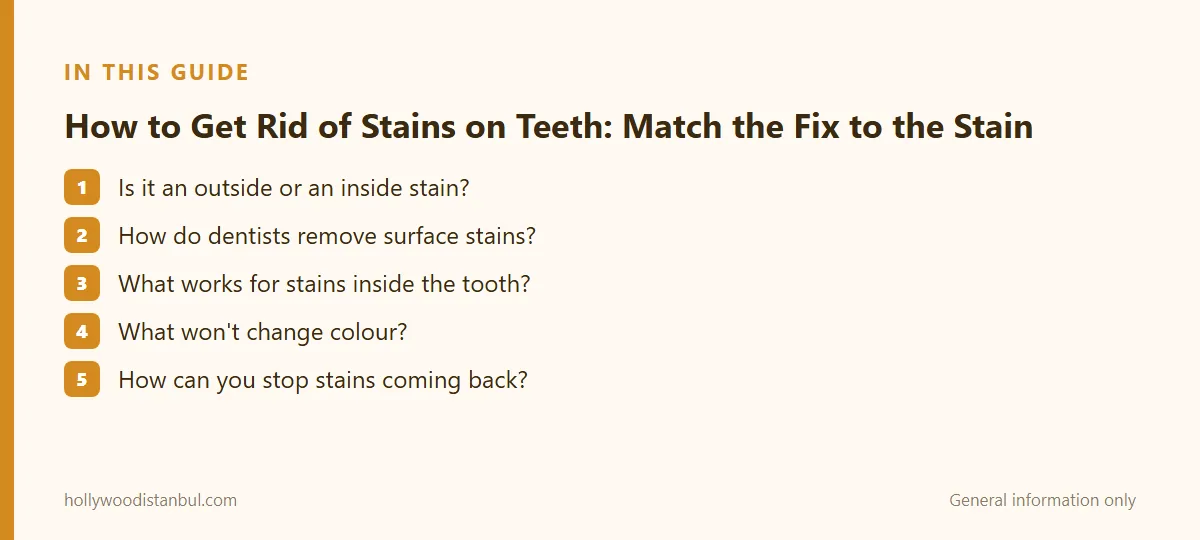
The quickest way to waste money on stain removal is to treat the wrong kind of stain. This guide matches each common cause to the fix the Australian Dental Association (ADA) and the Victorian Government’s Better Health Channel describe, so you know what to ask your dentist about.
Is it an outside or an inside stain?
The ADA separates stains into extrinsic (on the outside of the tooth) and intrinsic (inside the tooth), plus colour change from ageing as enamel thins and the darker dentine shows through. It says dental practitioners are best placed to diagnose the cause and advise whether whitening will work, so a check-up is the right first step.
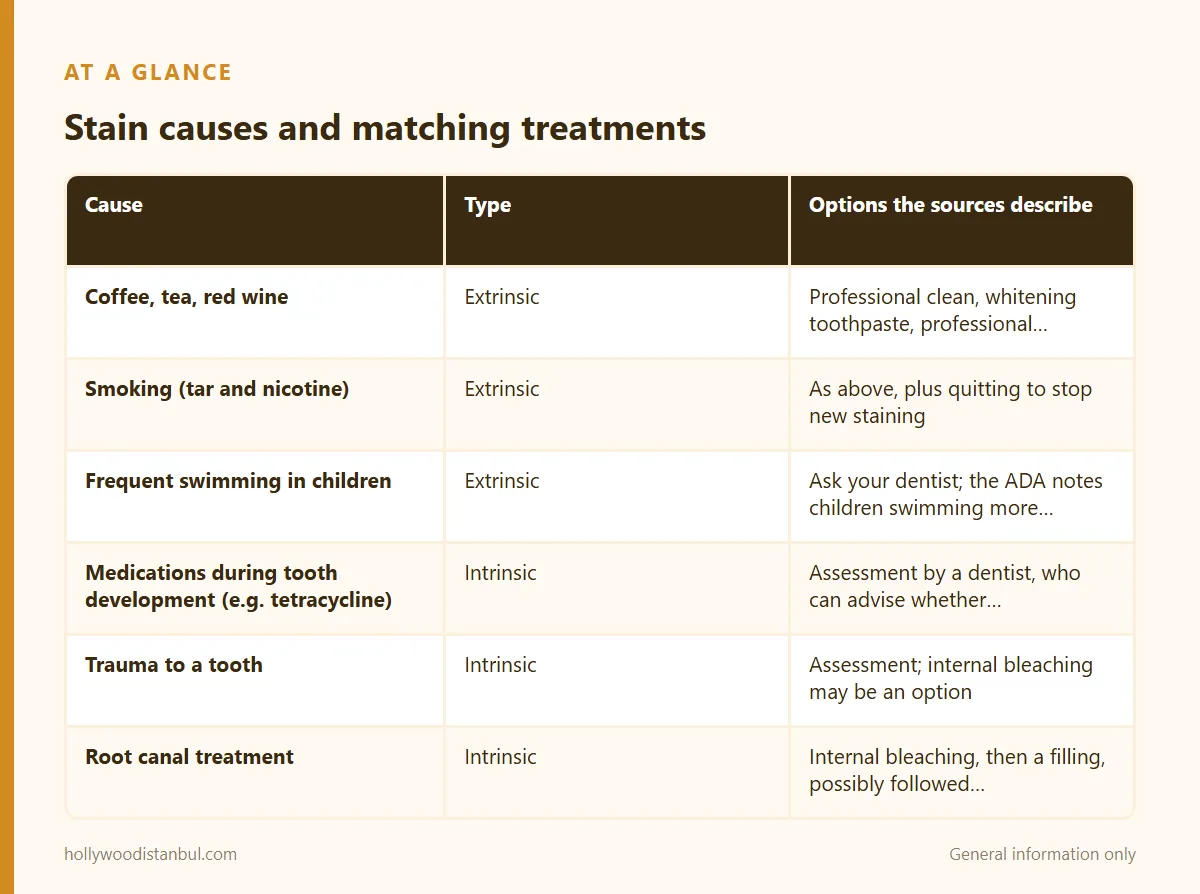
Stain causes and matching treatments
| Cause | Type | Options the sources describe |
|---|---|---|
| Coffee, tea, red wine | Extrinsic | Professional clean, whitening toothpaste, professional whitening |
| Smoking (tar and nicotine) | Extrinsic | As above, plus quitting to stop new staining |
| Frequent swimming in children | Extrinsic | Ask your dentist; the ADA notes children swimming more than 6 hours a week are at higher risk |
| Medications during tooth development (e.g. tetracycline) | Intrinsic | Assessment by a dentist, who can advise whether whitening will work |
| Trauma to a tooth | Intrinsic | Assessment; internal bleaching may be an option |
| Root canal treatment | Intrinsic | Internal bleaching, then a filling, possibly followed by a crown or veneer |
| Ageing | Thinner enamel | Discuss realistic options with your dentist |
How do dentists remove surface stains?
For extrinsic stains the ADA lists three options: whitening toothpaste, a professional dental clean, or professional teeth whitening. It notes whitening toothpaste mainly reduces surface stains and makes little difference to the colour of the tooth itself. Better Health recommends professional cleaning every 6 to 12 months to keep teeth looking their best.
What works for stains inside the tooth?
Intrinsic stains do not brush off. For a tooth darkened after root canal treatment, both the ADA and Better Health describe internal bleaching, where whitening gel is placed inside the tooth in the clinic. The ADA says the tooth is then sealed with a filling, and a crown or veneer may follow. Better Health also notes that some discolouration does not respond to whitening at all, in which case covering the tooth may be the realistic option. Read veneers in Australia: procedure and results if that is where you are heading.
What won’t change colour?
Better Health points out that fillings, crowns, bridges, veneers and false teeth do not whiten, and neither does decay. If you have visible restorations, plan any whitening with your dentist first, as the ADA notes a mismatch may mean replacing them.
How can you stop stains coming back?
- Brush twice a day and floss daily, as Better Health recommends.
- Limit strongly coloured food and drink such as black coffee and red wine.
- Do not smoke.
- Keep a professional clean every 6 to 12 months.
- If you use baking soda, choose a fluoride toothpaste that contains it rather than a homemade paste; the ADA says baking soda is mildly abrasive and not recommended for daily brushing on its own.
Questions to ask your dentist
- Are my stains extrinsic, intrinsic or age-related?
- Would a clean alone be enough?
- Will whitening work on my teeth, and what are the side effects?
- Do my fillings or crowns need replacing afterwards?
For costs, see our teeth whitening cost guide for Australia.
Sources
- Australian Dental Association, Teeth Staining
- Australian Dental Association, Teeth Whitening
- Better Health Channel (Victorian Government), Cosmetic dentistry and teeth whitening
This article is general information and is not a substitute for advice from your own dentist.