Dental Crown Before and After: What Really Changes
From damaged tooth to finished crown: the stages in between, material choices, normal aftercare and judging before-and-after photos.
Editorially reviewed.
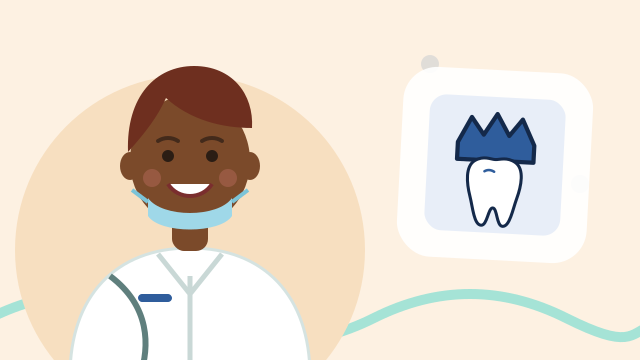
Dental crown before and after photos show a damaged, discoloured or worn tooth replaced by a tooth-shaped cap that matches its neighbours. The change happens over usually two visits: the tooth is shaped and a temporary crown fitted, then the permanent crown is cemented. Afterwards, short-term sensitivity is common.
Before and after photos can be persuasive, but they only show the final moment. This guide explains what really changes between “before” and “after”, what the in-between stage looks like and what to check when you look at a clinic’s photos.
What does a tooth look like before a crown?
Cleveland Clinic describes a crown as a tooth-shaped cap that restores a decayed, broken, weak or worn-down tooth, and notes that crowns are also used on root canal-treated teeth and implants. Typical “before” situations include:
- a tooth with a large or failing filling
- a cracked or broken tooth
- a tooth that has been root canal treated
- a badly worn or discoloured tooth
What happens between before and after?
The Australian Dental Association’s consumer site explains that at the first appointment the dentist cuts back the tooth to reshape it and places a temporary plastic crown. At the second visit the temporary crown is removed and the new crown is glued or cemented onto the tooth. Cleveland Clinic also describes two appointments in most cases.
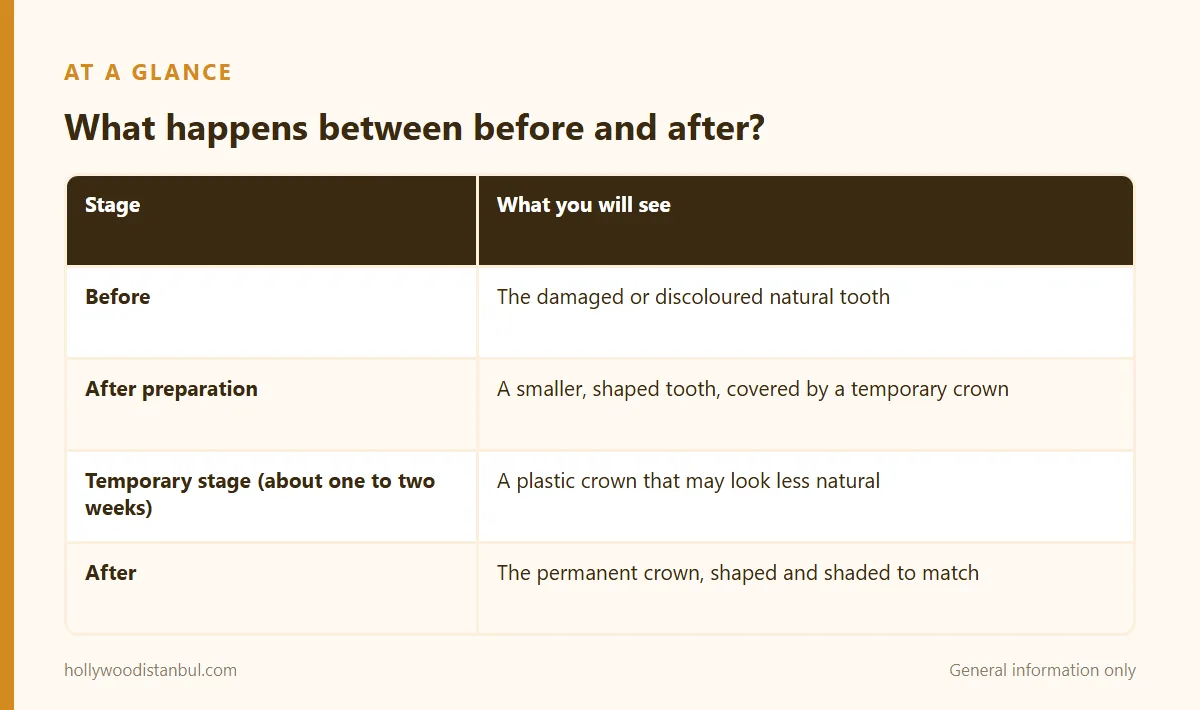
| Stage | What you will see |
|---|---|
| Before | The damaged or discoloured natural tooth |
| After preparation | A smaller, shaped tooth, covered by a temporary crown |
| Temporary stage (about one to two weeks) | A plastic crown that may look less natural |
| After | The permanent crown, shaped and shaded to match |
For a step-by-step account of the appointments, see the dental crown procedure.
How does the material change the “after”?
The Australian Dental Association’s consumer site lists porcelain, zirconia, gold alloy and porcelain bonded to metal as crown materials, and notes that porcelain and zirconia can be colour-matched to your other teeth. Cleveland Clinic says all-ceramic or porcelain crowns mimic tooth enamel more than any other type, while zirconia crowns are very durable and can withstand heavier forces.
- Front teeth: all-ceramic or porcelain is often chosen for appearance.
- Back teeth: zirconia or metal-based crowns are often chosen for strength.
What is normal after a crown?
Cleveland Clinic says most people can return to normal activities straight away, and that some sensitivity, especially to heat and cold, is normal for a couple of weeks. Contact your dentist if the bite feels high, pain persists or the crown feels loose.
How long does the “after” last?
Cleveland Clinic gives an average crown lifespan of five to 15 years, with some lasting longer. The Australian Dental Association’s consumer site points out that having a crown does not mean no further treatment will ever be needed, and that crowns can chip, fracture or stop matching over time. Crowns that do not fit well can trap bacteria and lead to decay, according to Cleveland Clinic.
How to judge dental crown before and after photos
- Check that photos were taken in similar lighting and from the same angle.
- Look at the gum line around the crown: healthy, pink gum is a good sign.
- Ask whether the photos are of the dentist’s own patients.
- Ask how long after treatment the “after” photo was taken.
- Remember that photos cannot show fit, bite or long-term durability.
For background on the treatment itself, see teeth capping: what a crown is.
Frequently asked questions
Will my crown match my other teeth?
Porcelain and zirconia crowns can be colour-matched. If you plan to whiten your teeth, do it before the crown is made, because crowns do not change colour.
Does getting a crown hurt?
The tooth is numbed before it is prepared. Some sensitivity afterwards is common for a couple of weeks.
How should I look after a crown?
Cleveland Clinic recommends brushing twice a day, flossing daily, avoiding very hard or sticky foods and asking about a night guard if you grind your teeth.
Sources
- Cleveland Clinic, Dental Crowns
- Australian Dental Association (Teeth.org.au), Crowns, bridges and veneers
This article is general information and doesn’t replace advice from your own dentist.