Dental Filling Tooth: What to Expect and How to Care for It
A filled tooth works normally, but knowing what's normal afterwards and what isn't helps you spot problems early.
Editorially reviewed.
A dental filling tooth is one where decayed or damaged parts have been removed and the space refilled with a material that sets hard. It works normally afterwards, but it still needs care and some attention over time.
Fillings are among the most common dental treatments, yet many people aren’t sure what to expect once the numbness wears off. This guide covers why a tooth needs filling, what happens during the appointment, what’s normal in the days afterwards, and the signs that a filled tooth needs checking.
Why does a tooth need a filling?
Most fillings repair damage from tooth decay. The NHS explains that decay may cause no symptoms at first. As it progresses, you may notice:
- toothache
- sharp pain when eating or drinking hot, cold or sweet things
- white, brown or black spots on a tooth
Not every early lesion needs drilling. The NHS says a dentist can sometimes reverse early decay with fluoride treatments such as varnish or mouthwash, but that you’ll probably need a filling once there’s a hole (cavity) in the tooth. Better Health Channel notes that fillings also repair teeth that are worn or damaged in other ways.
What happens when a tooth is filled?
Better Health Channel describes the basic process: your dental practitioner may numb the tooth with a local anaesthetic, removes the decay with a drill and other tools, then cleans, dries and fills the hole. Cleveland Clinic sets out the steps in more detail:
- The tooth is numbed with local anaesthetic.
- Decayed or damaged tissue is removed.
- The hole is filled with the chosen material.
- Tooth-coloured resin is hardened with a curing light.
- The filling is polished and rough edges smoothed.
- Your bite is checked to make sure it feels normal.
The material depends on the tooth and the size of the repair. Better Health Channel lists composite resin (tooth-coloured), glass-ionomer cement, dental amalgam (silver-coloured and now rarely used), gold (rarely used) and porcelain. It notes that each has benefits and limitations your oral health professional can discuss with you.
What’s normal after a filling?
Cleveland Clinic says you can eat and drink straight after most fillings, and eating won’t damage the filling. It’s sensible to wait until the numbness wears off so you don’t bite your cheek, lip or tongue. If you do eat sooner, chew slowly and carefully.
Some sensitivity is common. Cleveland Clinic describes minor tooth sensitivity and gum soreness as normal side effects that should go away within a week or two.
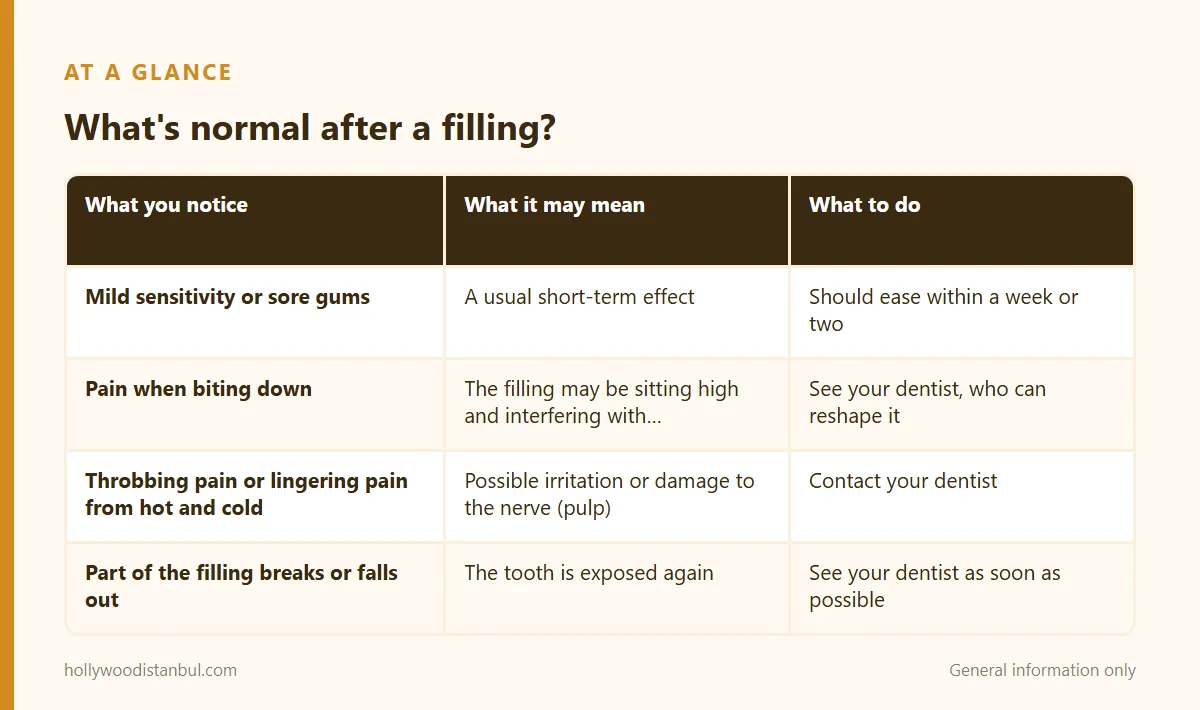
| What you notice | What it may mean | What to do |
|---|---|---|
| Mild sensitivity or sore gums | A usual short-term effect | Should ease within a week or two |
| Pain when biting down | The filling may be sitting high and interfering with your bite | See your dentist, who can reshape it |
| Throbbing pain or lingering pain from hot and cold | Possible irritation or damage to the nerve (pulp) | Contact your dentist |
| Part of the filling breaks or falls out | The tooth is exposed again | See your dentist as soon as possible |
When should you call the dentist?
Cleveland Clinic advises contacting your dentist straight away if a filling breaks or you develop:
- severe pain that pain relief doesn’t help
- a swollen face or jaw
- fever, chills or other signs of infection
Cleveland Clinic also notes that throbbing toothache or lingering pain with hot and cold can signal damage to the pulp, which may need root canal treatment or removal of the tooth. If you can’t reach your usual dentist and symptoms are severe, seek urgent care.
Is a filled tooth as strong as before?
Not quite. Better Health Channel states that an intact tooth is stronger than a filled one, which is why preventing decay matters so much. It also says that all fillings need replacing eventually, and that regular check-ups can pick up fillings worn down by chewing. Cleveland Clinic says that, depending on the material, some fillings can last up to 20 years.
When a tooth is too badly broken or decayed for a filling to hold, a crown may be suggested. The ADA notes crowns are often recommended for badly broken, cracked or decayed teeth, commonly back teeth after root canal treatment. Our step-by-step guide to the dental crown procedure explains what that involves.
How do you protect a filled tooth?
The same habits that prevent decay also protect existing fillings. Better Health Channel recommends:
- brushing twice a day with fluoride toothpaste
- eating a varied diet
- choosing tap water over sugary drinks
- going for regular dental check-ups
The ADA adds that you should clean between your teeth every day. If cost is a barrier to check-ups, it’s worth checking whether you’re eligible for public dental care. In Victoria, for example, Better Health Channel points to Royal Dental Hospital of Melbourne and community dental clinics. Our guide to free dental care in Australia covers eligibility more broadly.
Frequently asked questions
How long will my tooth be sensitive after a filling?
Cleveland Clinic says minor sensitivity and gum soreness should settle within a week or two. Pain that is severe, worsening or still there after that is worth having checked.
Why does my filled tooth hurt when I bite?
A new filling that sits slightly high can interfere with your bite. A dentist can usually fix this by reshaping the filling.
Can I eat straight after a filling?
Generally yes, according to Cleveland Clinic, but wait until the numbness wears off so you don’t accidentally bite your cheek or tongue.
Does a filled tooth ever need more treatment?
Yes. Better Health Channel notes that all fillings need replacing eventually, and regular check-ups can pick up fillings that have worn down from chewing.
Sources
- Better Health Channel (Victorian Government), Dental fillings
- Cleveland Clinic, Dental fillings
- NHS, Tooth decay
- Australian Dental Association, Crowns, bridges and veneers
This article is general information and doesn’t replace advice from your own dentist.