Porcelain Veneers: The Material, the Process and Care
How porcelain veneers are made, how they compare with composite and how to look after them.
Editorially reviewed.

Porcelain veneers are thin, lab-made ceramic shells bonded to the front of teeth to change their colour, shape or alignment. They resist staining better than composite and generally last longer, but need at least two visits and usually some enamel removal.
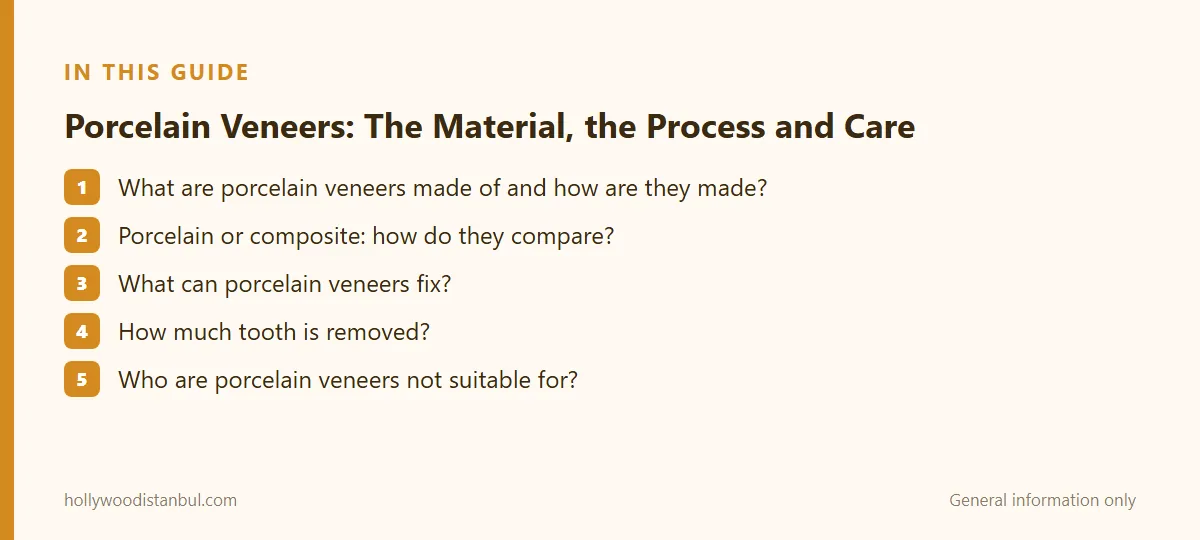
Porcelain is the material most people mean when they talk about veneers. This guide focuses on the material itself: how porcelain veneers are made, how they compare with composite, what they can and cannot fix, and how to look after them so they last.
What are porcelain veneers made of and how are they made?
The Australian Dental Association (ADA) describes a veneer as a thin shell of porcelain or composite resin glued to the front surface of a tooth. Porcelain veneers are made in a dental laboratory from an impression or 3D scan and then bonded to the teeth, which usually takes at least two appointments. The Better Health Channel (Victorian Government) likewise says ceramic veneers are lab-made and need a second appointment.
The Canadian Dental Association outlines the typical sequence: the dentist removes a thin layer of enamel, takes a mould and fits temporary veneers, then bonds the custom porcelain veneers with dental cement at a follow-up visit.
Porcelain or composite: how do they compare?
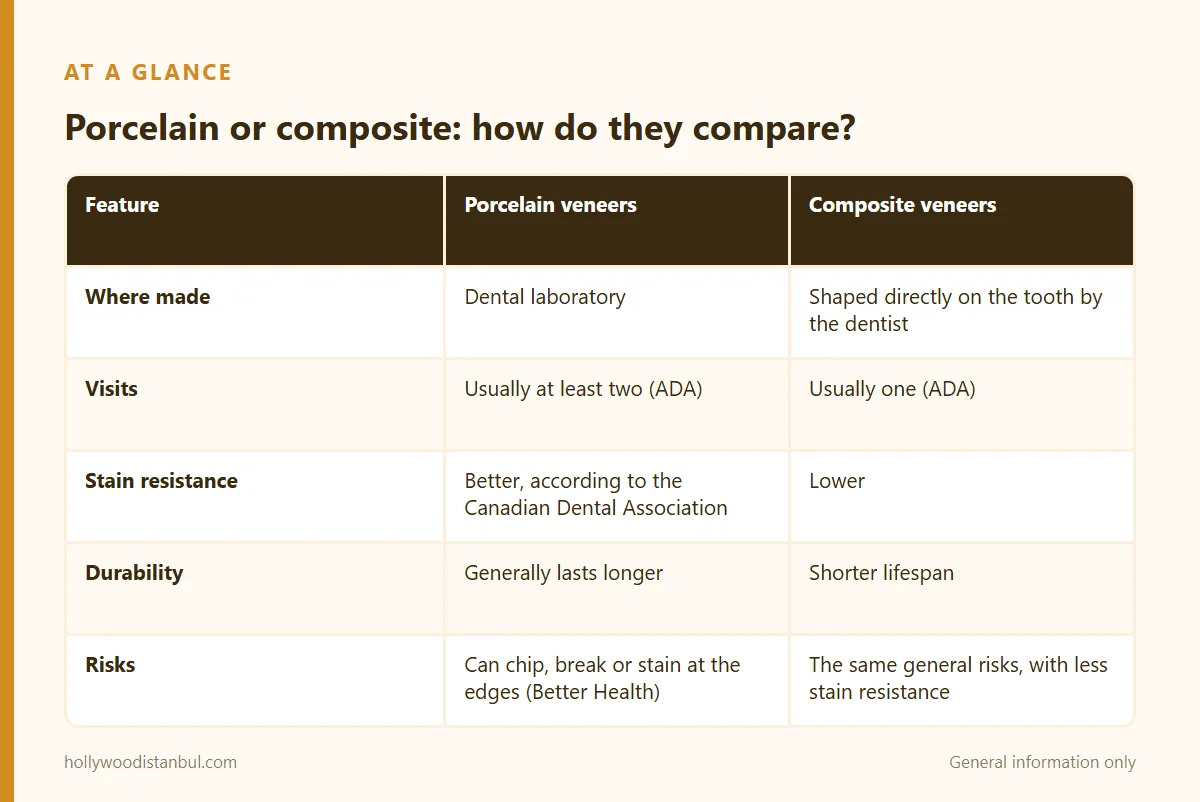
| Feature | Porcelain veneers | Composite veneers |
|---|---|---|
| Where made | Dental laboratory | Shaped directly on the tooth by the dentist |
| Visits | Usually at least two (ADA) | Usually one (ADA) |
| Stain resistance | Better, according to the Canadian Dental Association | Lower |
| Durability | Generally lasts longer | Shorter lifespan |
| Risks | Can chip, break or stain at the edges (Better Health) | The same general risks, with less stain resistance |
Cleveland Clinic gives an average veneer lifespan of 10 to 15 years with proper care. For the composite side, see our separate guide to veneers in Australia: procedure and results.
What can porcelain veneers fix?
The ADA says veneers suit:
- closing gaps between front teeth
- covering stained, discoloured, broken or chipped teeth
- correcting slightly crooked teeth
- reshaping oddly shaped teeth, such as small “peg” laterals
Cleveland Clinic adds that veneers are mainly cosmetic and do not strengthen or repair teeth the way a crown does.
How much tooth is removed?
It varies. The ADA says that because veneers are very thin, little or no tooth structure usually needs removing. Better Health says preparation may remove a thin layer of tooth, and warns that once a tooth is cut for a veneer, it may always need one. Cleveland Clinic notes that even “no-prep” veneers still require some enamel removal. Ask your dentist exactly how much they plan to remove, tooth by tooth.
Who are porcelain veneers not suitable for?
Better Health advises treating any disease before cosmetic work, and Cleveland Clinic says extensive decay or gum disease should be dealt with first. The Canadian Dental Association adds that grinding or clenching, not enough enamel to bond to, or a large part of the tooth missing may make another treatment a better fit.
How do you care for porcelain veneers?
- Brush twice a day with fluoride toothpaste and clean between teeth daily, as the ADA advises for veneers, crowns and bridges.
- Remember the tooth underneath can still decay.
- Avoid biting hard objects such as ice or fingernails.
- Limit strongly coloured drinks such as black coffee and red wine, which Better Health links to staining.
- Keep regular check-ups so small chips are found early.
Porcelain does not whiten, so Better Health notes veneers will not change colour if you whiten your natural teeth later. If you are budgeting, our guide to how much veneers cost in Australia covers fees.
Sources
- Australian Dental Association, Crowns, Bridges and Veneers
- Better Health Channel (Victorian Government), Cosmetic dentistry and teeth whitening
- Canadian Dental Association, Bonding and Veneers
- Cleveland Clinic, Dental Veneers
This article is general information and is not a substitute for advice from your own dentist.