How Long Does Composite Bonding Last? Wear and Upkeep
Typical bonding lifespan, what wears it down and when it needs a touch-up.
Editorially reviewed. Dental review: scheduled, not yet completed for this article.

How long does composite bonding last? Colgate, citing Cleveland Clinic, says bonding materials last three to 10 years depending on oral hygiene, and Cleveland Clinic says bonded teeth typically need touch-ups every five to seven years.
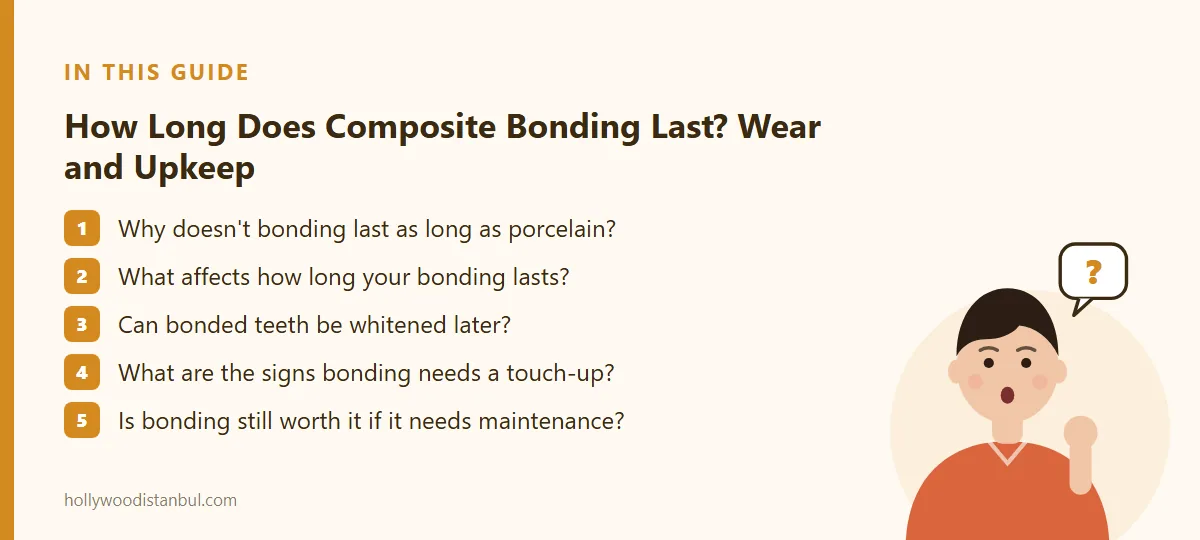
Bonding is popular because it is quick, usually done in one visit and removes less tooth than crowns or veneers. The trade-off is durability. Resin behaves differently from enamel and porcelain, so understanding how it wears helps you decide whether it suits your teeth and how to protect it.
Why doesn’t bonding last as long as porcelain?
Colgate lists the main drawbacks of composite resin bonding:
- It is less stain resistant than other options.
- The bonded area may be prone to chipping or breaking.
- Its lifespan is often shorter than alternatives.
By comparison, Cleveland Clinic gives veneers, which are mostly porcelain, a lifespan of about 10 to 15 years with proper care. The upside of resin is that it is applied directly to the tooth; the Australian Dental Association notes composite resin veneers are usually completed in one visit.
What affects how long your bonding lasts?
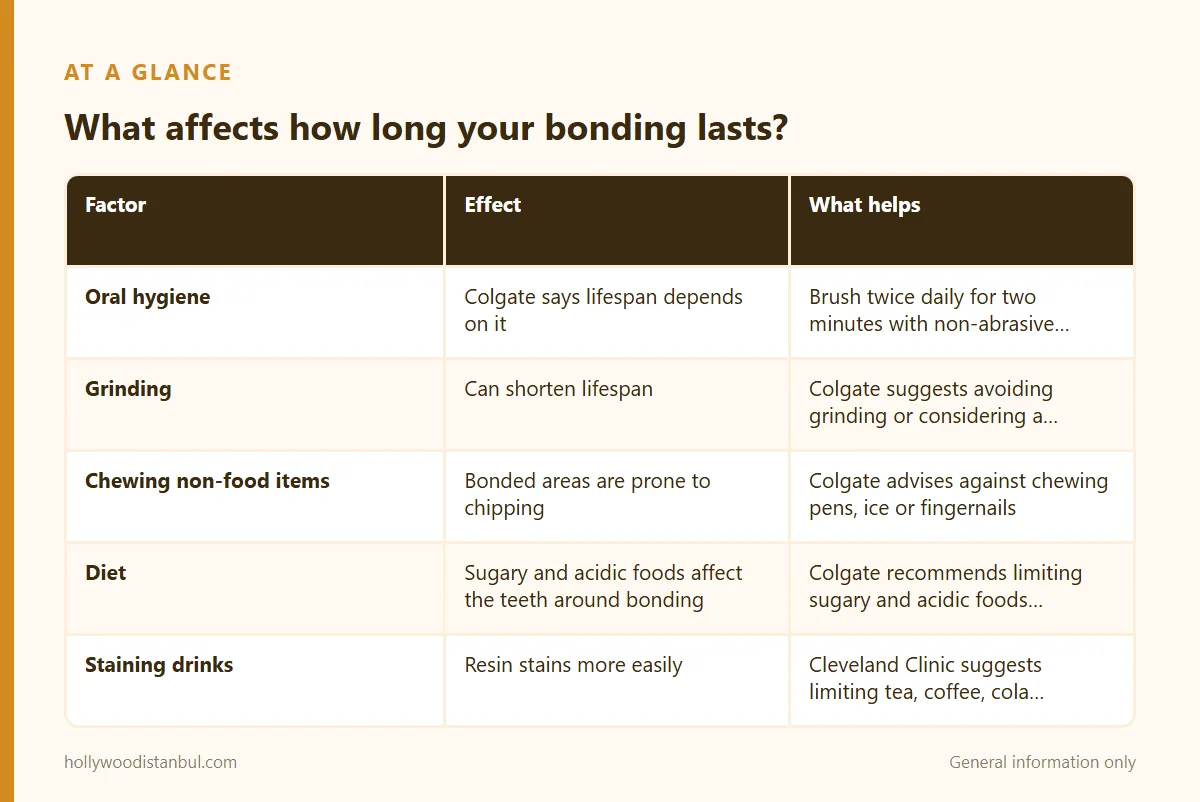
| Factor | Effect | What helps |
|---|---|---|
| Oral hygiene | Colgate says lifespan depends on it | Brush twice daily for two minutes with non-abrasive toothpaste; clean between teeth daily |
| Grinding | Can shorten lifespan | Colgate suggests avoiding grinding or considering a night guard |
| Chewing non-food items | Bonded areas are prone to chipping | Colgate advises against chewing pens, ice or fingernails |
| Diet | Sugary and acidic foods affect the teeth around bonding | Colgate recommends limiting sugary and acidic foods and drinks |
| Staining drinks | Resin stains more easily | Cleveland Clinic suggests limiting tea, coffee, cola and red wine, and rinsing with water |
Can bonded teeth be whitened later?
No. The Australian Dental Association states that whitening does not change the colour of composite resin (white) fillings, and the same applies to resin used for bonding. If you whiten your natural teeth after bonding, the bonded areas may look darker by comparison, and your dentist may need to redo them. If whitening is on your list, it usually makes sense to whiten first and have the resin matched to the new shade.
What are the signs bonding needs a touch-up?
Watch for:
- A visible chip, rough edge or small piece missing
- A line of staining where the resin meets the tooth
- Bonding that looks duller or darker than the surrounding teeth
Cleveland Clinic’s guidance to keep up regular cleanings and examinations applies here too. Your dentist can tell you whether a chip or stain needs a small repair or a full redo.
Is bonding still worth it if it needs maintenance?
For many people, yes. Colgate notes bonding removes less natural tooth than crowns and veneers, and it can usually be done without anaesthetic. Bonding a single tooth typically takes between half an hour and an hour, Colgate reports, citing Cleveland Clinic. Colgate also notes it is less suitable when the bite needs correcting or there is too little natural tooth left to build on. Just budget for touch-ups rather than treating it as a one-off cost. Our articles on the composite bonding procedure and composite bonding costs in Australia cover the rest of the picture.
Should you choose bonding or veneers?
It depends on what you want to change and how much maintenance you are happy with. Bonding is quicker and more conservative, but it stains and chips more readily. Cleveland Clinic describes porcelain veneers as stain resistant, with a typical lifespan of 10 to 15 years with proper care, although they require some enamel to be removed and are generally not reversible. A frank conversation with your dentist about your bite, any grinding habit and your budget for future touch-ups will point you towards the better fit.
Sources
- Colgate, Is Composite Resin Bonding Right For You?
- Cleveland Clinic, Tooth Discoloration
- Cleveland Clinic, Dental Veneers
- Australian Dental Association, Teeth Whitening
- Australian Dental Association, Crowns, Bridges and Veneers
This article is general information and is not a substitute for advice from your own dentist.