Implants in Australia or Turkey: Pros and Cons

Choosing where to have dental implants is about more than the price tag. For Australians who have lost one or more teeth, implants are often the preferred way to restore chewing and appearance, but high local fees lead many to look at Turkey. This article sets out the pros and cons of dental implants overseas compared with treatment in Australia: cost, quality, waiting times, the treatment timeline, aftercare and the risks that come with distance.

Implants in Australia: quality at a high price
Dental care in Australia is largely private. A single implant, including the titanium fixture, abutment and crown, typically costs several thousand dollars, roughly AUD 5,000 to AUD 8,000 or more depending on the case (approximate, 2026). Full-mouth rehabilitation can run to very large sums.
The reasons are structural: high wages for dentists, specialists and support staff, commercial rents, professional indemnity insurance and the cost of modern equipment. Strict regulation protects patients but adds compliance costs. Medicare does not cover implants for most adults, and private extras cover usually pays only a limited amount towards major dental work, so most of the cost falls on the patient. For more on this, see our article on why dental care costs more in Australia than in Turkey.
Why Turkey appeals
Lower living costs and wages in Turkey allow clinics to charge much less for implant treatment. Many clinics in Istanbul that serve international patients use CBCT imaging, CAD/CAM systems for crowns, and implant systems from established international manufacturers. Many patients have had good outcomes, but low prices do not automatically mean good or poor quality: standards vary between clinics, and the dentist’s skill and planning matter most.
Pros and cons of dental implants overseas: side by side
| Factor | Australia | Turkey |
|---|---|---|
| Cost per complete implant | High (approx. AUD 5,000 – 8,000+) | Usually considerably lower; travel costs extra |
| Technology and materials | Modern equipment; materials regulated by the TGA | Modern equipment in many clinics; implant brands vary, so confirm in writing |
| Waiting times | Can be long for some specialists | Often short scheduling for international patients |
| Logistics | Local appointments; no travel needed | Usually two long-haul trips; packages may include transfers, hotel and an interpreter |
| Practitioner oversight | Registered with the Dental Board of Australia (AHPRA); checkable online | Licensed in Turkey; qualifications must be verified by the patient |
| Aftercare and complications | Same dentist nearby for reviews and repairs | Remote advice; hands-on care requires a local dentist or a return trip |
| Recourse if things go wrong | AHPRA and state health complaint bodies | Turkish processes only, difficult to pursue from Australia |
How implant treatment in Turkey usually unfolds
Before you travel: remote assessment
The process starts before you board a plane. You send a panoramic X-ray and, if available, a 3D scan. The clinic prepares a provisional treatment plan and quote. Treat this as preliminary: it should be confirmed after a full clinical examination in person, and you should ask in advance how changes to the plan affect the price.
First trip: implant surgery
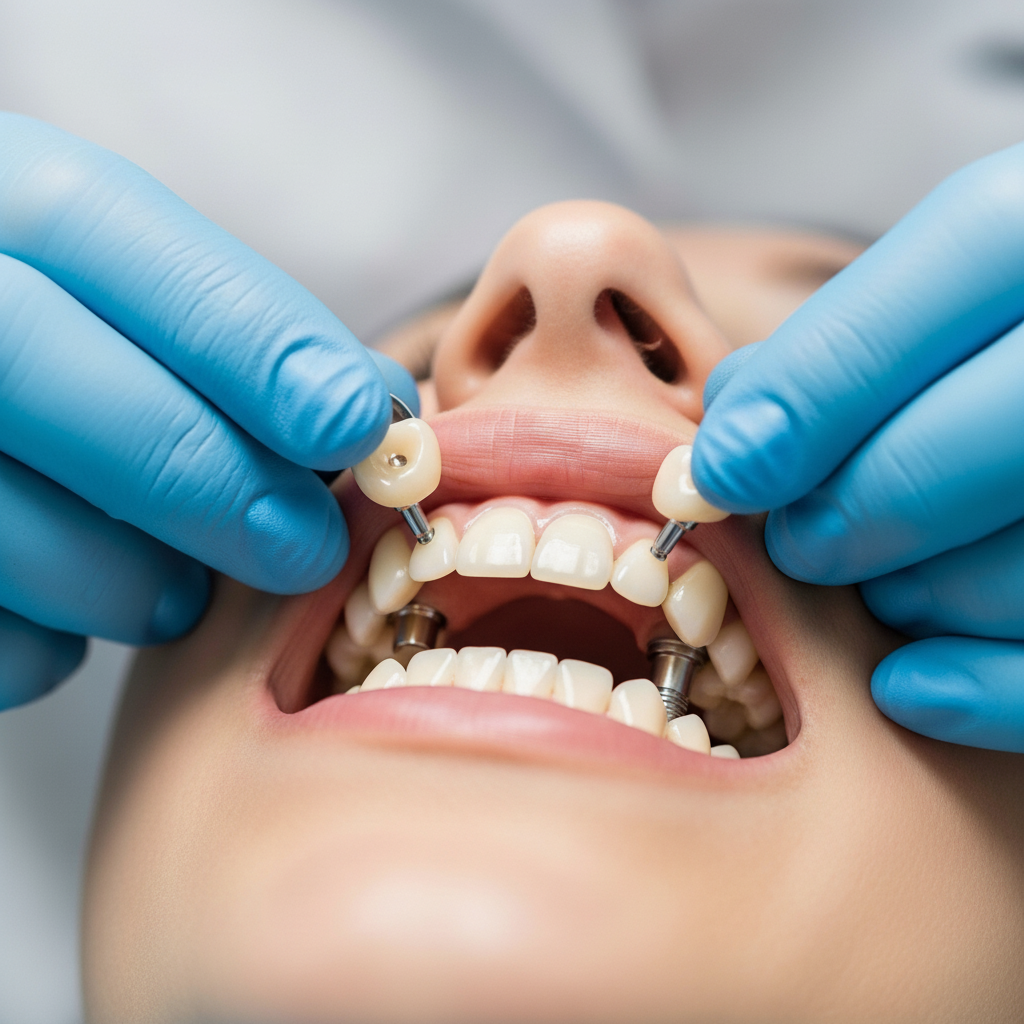
The first stay is commonly about five to seven days. After a clinical examination and imaging, the dentist places the titanium implants in the jawbone. Temporary teeth may be fitted for appearance and function during healing, depending on the case.
Healing period: osseointegration
After placement, a healing period of about three to six months is usually needed while the jawbone bonds with the implant surface. You return to Australia during this time and follow the clinic’s post-operative instructions. It is worth having a local dentist who can see you if you develop pain, swelling or other problems.
Second trip: final crowns
Once the implants have integrated, a second trip of about seven to ten days is organised. Impressions or digital scans are taken and the crowns are made, often using CAD/CAM, to match the colour, shape and bite. The final crowns or bridge are then attached to the implants and adjusted.
Risks that deserve weight
- Surgical risks: infection, nerve injury causing numbness, sinus problems and implant failure can occur wherever surgery is performed. Smoking, uncontrolled diabetes and gum disease increase the risk.
- Long-haul travel: flights between Australia and Istanbul usually take more than 20 hours with a stopover. Flying soon after surgery raises the risk of blood clots and makes swelling or bleeding harder to manage.
- Compressed schedules: short stays leave limited time to identify and correct problems before you leave.
- Later complications: peri-implantitis (inflammation around an implant) or loose components can appear months or years later, when you are back home.
- Insurance: many travel insurance policies exclude planned medical treatment and its complications, and Australian health funds generally do not pay for treatment overseas.
Quality, hygiene and follow-up: what to ask
Many clinics state that they follow strict sterilisation protocols and that their dentists are experienced in complex implant cases. Rather than relying on these claims, ask specific questions:
- Who will place the implants, and what are their qualifications and implant experience?
- Is the clinic licensed, and does it hold any recognised accreditation?
- Which implant system and crown material will be used, and will you receive the implant documentation?
- How are instruments sterilised?
- What does the written warranty cover, under what conditions, and who pays for return travel if an implant fails?
- Will you receive a complete record of treatment, including scans, so an Australian dentist can provide check-ups and repairs?
The choice between Australia and Turkey depends on your budget, your health, the complexity of your case and how much you value having your dentist close by. Turkey can make implants far more affordable, while Australia offers proximity, straightforward follow-up and clear recourse. Before deciding, have an individual examination and a written treatment plan from a qualified, licensed dentist.

Request your personal treatment plan and quote
Tell us briefly what you need. Your request is passed to a dental clinic in Turkey, which will contact you with a treatment plan and price. No obligation.